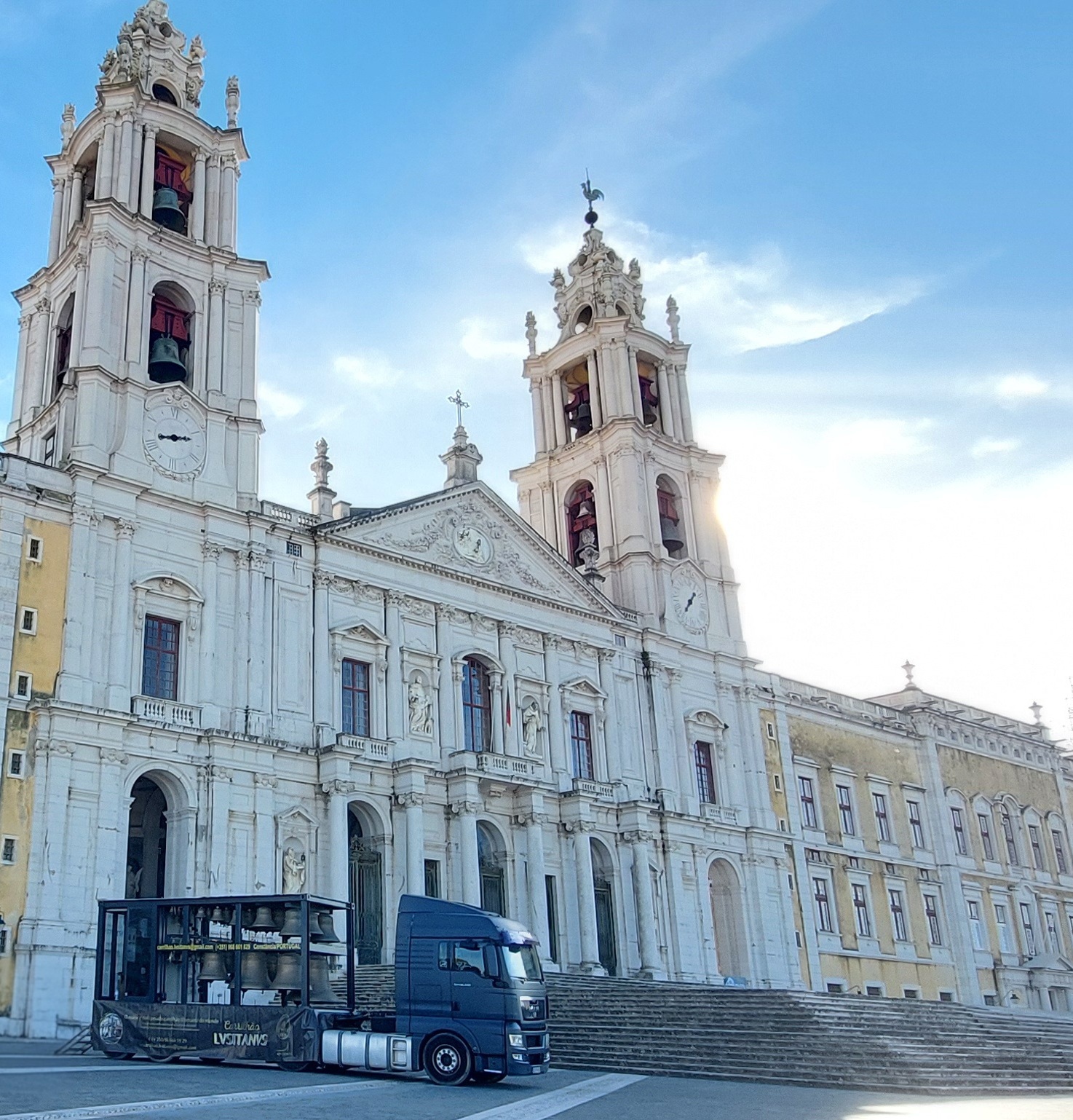

The National Palace of Mafra is part of the Royal Building of Mafra, a Baroque architectural complex consisting of a Palace, a Basilica, and a Convent, associated with gardens and a vast Royal Hunting Grounds (Tapada). This historical heritage site spans over 1,200 hectares and was inscribed on the UNESCO World Heritage List in 2019.
Commissioned by D. João V to fulfill a vow of succession, the Palace of Mafra is one of the most important Baroque monuments in Portugal and one of the largest in Europe. It occupies a construction area of 38,000 square meters, with approximately 1,200 rooms, 5,200 doors and windows, and 156 staircases.
UNESCO recognized this monument as an achievement of architecture, engineering, and human genius. Based on designs by Filippo Juvarra, its final design was realized by the German Johann Friedrich Ludwig (João Frederico Ludovice), and its construction was led by the kingdom’s chief engineer, Custódio Vieira. The first stone was laid on November 17, 1717, and the Basilica was consecrated on October 22, 1730.
The Basilica, inspired by the great churches of Rome, houses one of the most significant collections of Italian sculpture of its time, with 58 statues, a large crucifix with adoring archangels, and three high reliefs. It also features an important collection of paintings, representing some of the most celebrated painters active in Italy and France in the early 1730s. The collection of vestments and liturgical implements is also highly significant due to its quality and rarity.
The Palace Library is one of the monument’s most iconic spaces. With a refined selection of approximately 30,000 volumes, it is one of the exponents of Enlightenment knowledge, representative of 18th-century court culture.
Also noteworthy is the bell collection, with 120 bells, including two of the largest carillons of the 18th century, cast in Antwerp and Liège in the workshops of Willem Witlockx and Nicolas Levache, respectively. Associated with the bells are two clocks dating from the first half of the 18th century, as well as four automata for automatic music.
Inside the Basilica is a unique set of pipe organs, composed of six instruments designed to be played together, built between 1792 and 1807 by Portuguese organ builders António Machado e Cerveira, and Joaquim Peres Fontanes.
The Palace of Mafra has been a member of the Association of European Royal Residences since 2009.
Much to our regret, we must inform you that although it was hoped until the very last minute that visitors could be welcomed, the tireless dedication of the restoration patrons, the technical team, and the Congress organizers could not override the technical requirements of this historic intervention. As this is the first such work since the building’s inauguration, the Basilica of Mafra must remain closed to allow for the conclusion of the project, meaning the rare opportunity to witness these six instruments will not be available during the World Carillon Congress.
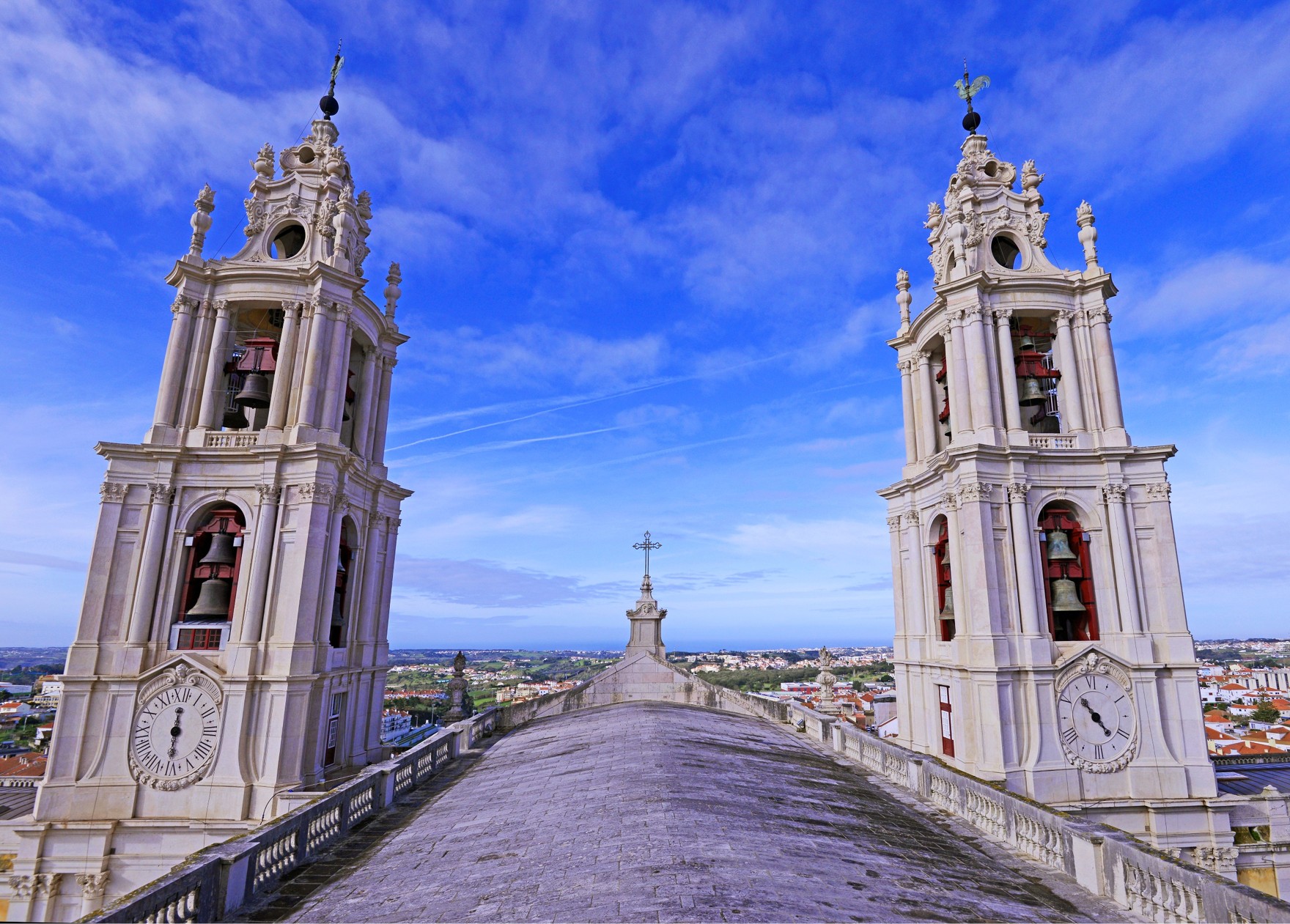
THE CARILLONS AT THE NATIONAL PALACE OF MAFRA
The carillon of the South Tower of the Basilica of the National Palace of Mafra is a world reference instrument. The North Tower Carillon was cast in Liège by Nicholas Levache and the South Tower Carillon was cast in Antwerp by William Witlockx. Each one of these two instruments weigh more than 44 tons, both with F bourdons weighing 9.5 tons.
Between 2018 and 2020, an unprecedented restoration was carried out in the 300-year history of the National Palace of Mafra, restoring the two towers of the Basilica, all set of bells as well as an extensive restoration of the Witlockx carillon. The stonework, the wooden structures and the two large clocks and their musical automata by the clockmaker De Beefe were also restored.
The two bell towers house two impressive sets of musical automata and clock mechanisms, unique in the world for their technological complexity (4 large drums, three of them with 2 programming tracks, and one with 3 tracks), and for the ornamental beauty of the whole set, featuring statues and beautiful sphinxes.
LVSITANVS MOBILE CARILLON
The Congress will be enhanced by the presence of the LVSITANVS Mobile Carillon, the largest mobile carillon in the world, which comprises 63 bells, weighing a total of around 7 tons, the smallest weighing just over five and a half kilograms and the largest almost 1.3 tons.